
Understand how battery cooling airflow supports reliable operation and when the system should be inspected.
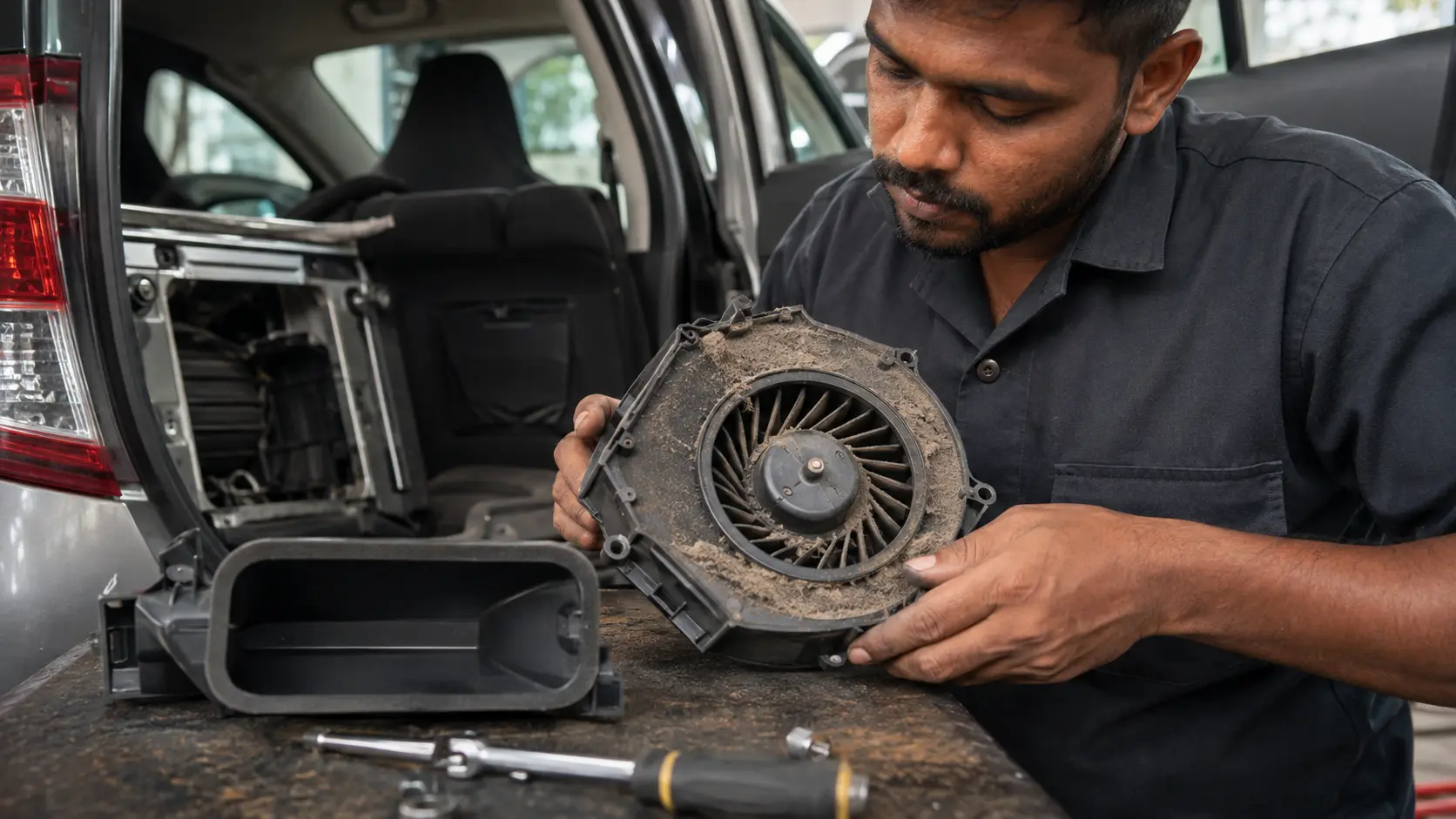
Hybrid battery cooling airflow helps keep the battery within an appropriate operating temperature range. When an intake, duct or fan becomes restricted, the system may work harder to control temperature and battery performance may be affected.
How the cooling path works
Many hybrid vehicles draw cabin air through a visible intake near a rear seat or interior trim panel. Air then moves through a duct and fan to the battery area. The arrangement varies by make and model, so the correct inspection method also varies.
Conditions that can reduce airflow
- Dust and lint collect around an intake or fan.
- Seat covers, luggage or interior items block the visible vent.
- Pet hair or other debris builds up in the cooling path.
- A fan becomes noisy, restricted or electrically faulty.
- Interior trim or ducts are fitted incorrectly after previous work.
A blocked vent does not automatically mean that the battery is damaged. It does mean the cooling system should be checked, especially when fan noise, warning lights or changing battery behaviour appear at the same time.
Practical care between inspections
Keep the passenger compartment reasonably clean and make sure the visible cooling intake remains unobstructed. Do not push tools, liquids or cleaning equipment into the vent. Internal fan, duct and high-voltage battery inspection should be carried out by a trained technician.
What a workshop may inspect
A battery maintenance visit may include the visible intake, fan condition, airflow path, relevant scan data and battery behaviour. If a fault code is present, the technician should consider it together with the physical inspection rather than assume cleaning alone will solve the problem.
When to arrange a check
Book an inspection when the cooling fan becomes louder or more frequent, a hybrid warning appears, battery charge changes unusually quickly or the vehicle has operated in dusty conditions for a long period. Early attention can help identify a maintenance issue before it becomes a more disruptive fault and gives the technician better information for repair or replacement decisions.